Recruitment & age checks
Recruitment rules require identity and age checks, prohibit child and forced labor, and prohibit retention of identity documents or recruitment deposits.
ABOUT US / SUPPLIER QUALIFICATION
Documented labor, safety, environmental and business-ethics procedures for supplier qualification.
Explore Xinyinhai’s internal procedures for factory social responsibility: what they cover, who they assign responsibility to, and how they connect findings to follow-up.
Six connected areas. One supplier review.
01 / PEOPLE & WORKING CONDITIONS
Start with the rules governing recruitment and employment. The documents cover age checks, voluntary employment, working-time records and respectful treatment.
Recruitment rules require identity and age checks, prohibit child and forced labor, and prohibit retention of identity documents or recruitment deposits.
The procedures address suitable work, restrictions on hazardous tasks, health checks and training for young workers.
Documented rules cover voluntary overtime, employee review of attendance records and itemized payroll information.
Policies prohibit discrimination, harassment, and mental or physical abuse. Complaint handling is linked to investigation and feedback.
For qualification: review the current recruitment procedure, age-check controls, working-time records and payroll-record format for the relevant site.
02 / COMMUNICATION & SUPPORT
The documents provide for elected worker representatives, direct or written complaints, investigation and feedback. Policies call for confidentiality and protection against retaliation.
Welfare documents address leave, workplace hygiene, first-aid support and living allowances. Current arrangements are part of the site review.
Direct or written feedback; worker representation.
Gather relevant information and provide feedback.
Confidential handling and non-retaliation are policy requirements throughout.
Confirm active channels and responsible contacts during qualification.
03 / HAZARDS, CONTROLS & RESPONSE
The safety documents connect hazard assessment, role-specific instruction, protective measures and inspection. Responsibility is assigned across safety, HR and operating departments.
Maintenance and energy-isolation procedures address equipment checks and control of hazardous energy.
PPE rules identify task-related protection and cover use, storage, cleaning, replacement and selected equipment checks.
Procedures assign response responsibilities and cover alarm, evacuation and emergency preparation.
The documents address first-aid support, occupational-health precautions and incident reporting.
Rules cover identification, designated storage, safety information, inspections and escalation of abnormalities.
The premises procedure links recorded findings to responsible-department action and follow-up checks.
Process summaries are shown below. Operational instructions, medical details and security layouts are excluded from public previews.
04 / MATERIALS & WORKPLACE CONDITIONS
The available evidence concerns practical chemical, waste and premises controls. It supports a discussion of documented handling requirements and the records needed to assess their use.
Evidence to request: current handling procedures, applicable disposal permissions, transfer records and inspection follow-up. These records are separate from the procedure summaries on this page.
05 / BUSINESS CONDUCT
Integrity requirements cover business dealings and supplier expectations. Documented requirements provide a starting point for due diligence; supplier acknowledgment and implementation evidence are separate review items.
The integrity policy prohibits bribery, corruption, fraud and improper benefits in dealings with suppliers, recruitment agents, inspectors, auditors and customers.
Policy responsibilities: investigation, employee training and communication to business partners.Supplier procedures call for written acknowledgment of social-responsibility requirements and exclude prison-labor suppliers.
Qualification focus: the current requirements, supplier acknowledgments and any supporting assessment records.The quality-culture procedure also addresses truthful inspection and test records, protection of confidential information, and reporting concerns. It prohibits falsifying results, concealing nonconforming products and bypassing the approved release process. Training and review support these responsibilities.
Explore quality responsibilities and record integrity06 / LEARNING & MANAGEMENT FOLLOW-UP
Training, premises checks, internal audits, incident handling and management review form the documented follow-up sequence below. Each stage calls for a record or a decision that a buyer can ask to review.
Induction, role instruction and assessment records.
Workplace checks and internal-audit evidence.
Record findings and investigate relevant causes.
Set corrective measures and responsibilities.
Follow up the corrective action and its effectiveness.
Bring action status into management decisions.
This is a cross-procedure summary of required activities. Completion, frequency and action status must be checked against current records.
ACTIVITIES & COMMUNITY
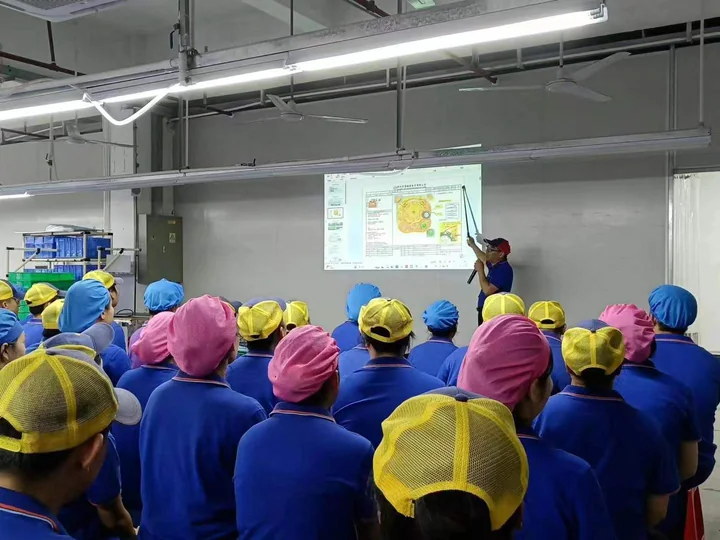
Training, shared experiences and employee stories bring Xinyinhai’s factory team into view.
Employees gathered for an internal production-team learning session.
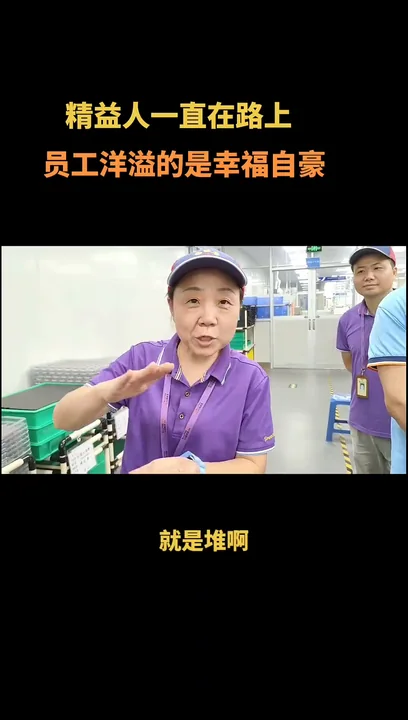
A short video records employees speaking on the factory floor.
Factory walls were used to display production topics and learning material.
SELECTED DOCUMENT EVIDENCE
Five examples show how the internal documents structure responsibilities and follow-up. Previews are English redrawings of procedures or a blank template, with source types stated explicitly.
Health, safety & environment
Source: New-material Risk Assessment Procedure
Shows assessment requirements; no completed assessment is presented.
Training & worker safety
Source: Employee Training Procedure
Describes required records; no attendance or completion results are presented.
Workplace conditions
Blank example — no measured results
Source: Premises Management Procedure; Lighting Inspection Record Form
The blank form contains no measured results. Historical reference values are omitted.
Internal review & incident response
Source: Internal Audit Guidelines; Accident Handling Procedure
Two related process summaries; no completed audit, incident case or closure result is presented.
Management oversight
Source: Social Responsibility Management Review Procedure
Shows the review structure; no meeting minutes or completed decisions are presented.
Original documents and populated personnel, customer, incident or security records are not public downloads. Supporting information is considered through a scoped qualification review.
BUYER QUESTIONS
Use these answers to define what can be learned from procedures and what needs current, site-specific evidence.
Recruitment rules require age and identity checks and prohibit child labor. Separate documents address young-worker protection and child-labor remediation, including stopping the work and supporting safety, health and education. The current controlled procedure and implementation records should be reviewed for the site being qualified.
The documents provide for worker representatives, direct or written complaints, investigation and feedback. They also call for confidentiality and protection against retaliation. The active channels, responsible contacts and response arrangements should be confirmed during qualification; this page does not establish an independent hotline or a response-time guarantee.
The procedures cover risk assessment, machinery and energy controls, PPE, chemical handling, emergency response, workplace inspections and safety training. Incident handling includes reporting, cause investigation and corrective or preventive measures. Current conditions and execution records require site-specific review.
Internal-audit procedures call for findings to be recorded, corrective action to be assigned and the response to be verified. The management-review procedure brings action status and other inputs into decisions with responsible roles and planned dates. These summaries do not claim that a particular finding has been closed.
Discuss the Xinyinhai factory site, review period and information needed with your project contact through LEANODM.com. Relevant supporting information may be considered for controlled sharing after a scope and confidentiality review, with an NDA where appropriate. Availability and permission to share are confirmed case by case; personnel records, customer information and security-sensitive details are not public downloads.
DEFINE THE QUALIFICATION SCOPE
Tell your project contact through LEANODM.com which Xinyinhai factory site, review period and supporting information your team needs. Relevant procedures or records may be considered for controlled sharing after a scope and confidentiality review, with an NDA where appropriate.
The download does not submit a request. Use the inquiry form to describe the review scope, or share the completed brief with your existing project contact. Availability and permission to share are confirmed case by case.
Request only the information needed for qualification. Personal records, customer information and sensitive operational details require restricted handling.